Can Baby Monitors Be Hacked? What Every Parent Needs to Know in 2026
Can baby monitors be hacked? Yes – and it happens more often than most parents realise. Baby monitor hacking is one of the fastest-growing privacy threats for families in 2026. So if you own a WiFi baby monitor, this guide is essential reading. We explain exactly how it happens, how common it really is, the warning signs to look for, and which monitors are hardest to hack.
⭐ Quick Verdict
Can baby monitors be hacked? Yes. WiFi baby monitors carry the highest risk because hackers can attack them from anywhere in the world. Non-WiFi monitors are much harder to hack, but they are not completely safe either. The good news is that FHSS and DECT monitors – like the Infant Optics DXR-8 PRO and VTech VM901 – are the hardest to break into. And with a few simple steps, you can make any monitor far more secure today.
Table of Contents
- Can Baby Monitors Be Hacked? The Direct Answer
- How Can Hackers Get Into Baby Monitors?
- How Common Is Baby Monitor Hacking?
- How Do You Know If Someone Hacked Your Baby Monitor?
- Can Baby Monitors Be Hacked If Not on WiFi?
- What Kind of Baby Monitor Can’t Be Hacked?
- How to Stop Your Baby Monitor From Being Hacked
- FAQ: Quick Answers for Parents
- Quick Summary Block
- Our Top Secure Monitor Picks on Amazon
Can Baby Monitors Be Hacked? The Direct Answer
Can baby monitors be hacked? Yes – and it is not just a theory. Real families have experienced baby monitor hacking, and the number of confirmed incidents is rising every year. So if you use a connected camera in your nursery, you need to understand this risk clearly.
A baby monitor hacking incident usually happens in one of two ways. Either a hacker breaks into your home network and accesses the monitor through it. Or, in the case of older non-WiFi models, they intercept the radio signal from close by. Both are real threats. But the internet-based attack is far more common – and far easier to pull off.
In short, the more your monitor depends on the internet, the bigger the baby monitor hacking risk. A WiFi monitor can be attacked from anywhere in the world. A non-WiFi monitor, however, can only be targeted by someone physically close to your home. That is a massive difference – and it is why so many parents are switching to offline models.
Can baby monitors be hacked?
Yes. WiFi baby monitors are the most vulnerable – hackers can access them remotely via the internet. Non-WiFi monitors are harder to hack but can still be intercepted by someone nearby. No monitor is completely hack-proof, but FHSS and DECT models come closest to being safe.
WiFi Monitors vs. Non-WiFi Monitors: Which Is More at Risk of Being Hacked?
WiFi monitors carry the highest baby monitor hacking risk. Because they connect to the cloud, they become targets for the same attacks that hit smartphones, laptops, and other connected devices. And because millions of WiFi cameras use similar software, a single weakness can expose thousands of devices at once.
Non-WiFi monitors, on the other hand, use a direct radio link between the camera and your parent unit. So they are only at risk from someone in physical range – which makes remote attacks impossible. But they are not risk-free, as we explain in Section 5.
The Two Main Ways Baby Monitors Get Hacked
- Remote network attack (WiFi monitors): A hacker finds your monitor on the internet – often using automated scanning tools – and logs in using a default or stolen password. This can happen from any country, at any time, without any physical presence near your home.
- Signal interception (non-WiFi monitors): Someone nearby uses radio scanning equipment to pick up the signal from your monitor. This is far less common and requires the attacker to be physically close to your property.
How Can Hackers Get Into Baby Monitors?
Now that we have confirmed that baby monitors can be hacked, let us look at exactly how it happens. Baby monitor hacking does not require advanced skills. In many cases, a hacker simply types a device’s IP address into a browser and logs in with the factory default password. Because millions of parents never change that default password, the entry point stays wide open.
Security researchers describe hacking poorly secured IoT cameras as “child’s play.” According to a Bitdefender investigation, many popular baby monitors have serious security flaws that manufacturers choose not to fix. So the problem is not just about careless parents – it is also about careless companies.
Reason 1: Default and Weak Passwords – the Top Baby Monitor Hacking Method
This is the number one way baby monitors get hacked. Most monitors ship with a standard default password – something like “admin” or “123456”. Hackers know these defaults. So they scan the internet for monitors that still use them, and then log straight in.
In fact, changing your default password is the single most effective thing you can do right now. It takes about 30 seconds. And it immediately removes you from the easiest category of targets.
Reason 2: Credential Stuffing
Even if you use a unique password for your baby monitor, you may still be at risk – because of credential stuffing. Your email and password may have leaked in a data breach on another website. Hackers take those leaked credentials and automatically try them on baby monitor apps and smart home platforms.
If you reuse the same password across multiple accounts, this attack can succeed. That is why using a unique password for every account matters so much – especially for anything connected to your home and your child’s nursery.
Reason 3: Outdated Firmware
Firmware is the internal software that runs your baby monitor. Manufacturers regularly release updates to fix security holes. But many parents never install those updates. As a result, monitors keep running old software with known weaknesses – and hackers exploit those weaknesses directly.
According to ExpressVPN’s 2026 guide on baby monitor hacking, outdated firmware is one of the most common paths to a successful attack. So accepting every firmware update is not optional – it is essential.
Reason 4: Unsecured Home WiFi and Open Ports
Your baby monitor is only as secure as the network it sits on. If your home WiFi uses a weak password or outdated encryption, hackers can break into the network itself – and then access every device on it, including your monitor.
Open ports on your router also create entry points. Some baby monitors automatically open network ports for remote access. But if those ports are not secured, they become an open door for attackers from anywhere in the world.
How Common Is Baby Monitor Hacking?
Baby monitor hacking is more common than manufacturers admit, but less common than the most alarming headlines suggest. So let us look at what the real data tells us – because the truth sits somewhere in the middle.
Key Data Point
In 2026, over 1.1 million baby monitors and security cameras were exposed through vulnerabilities in Meari Technology’s platform (CVE-2026-33356). These devices were sold on Amazon under brand names including Arenti, Anran, Boifun, and ieGeek. The flaw allowed anyone with a free account to view live feeds from thousands of cameras in real time. (Source: eSecurity Planet, 2026)
Real Baby Monitor Hacking Incidents: It Has Happened to Real Families
These are not made-up scare stories. They are confirmed incidents that affected real children.
- The Stripling family, Arkansas: A stranger hacked their WiFi baby monitor and spoke directly to their infant through the two-way speaker. The family threw the monitor away immediately. (Source: THV11, 2025)
- A Colorado mother, October 2025: She heard an unknown person’s voice through her baby monitor at night. Her monitor was connected to WiFi and had never had its default password changed.
- Kelsey Rose’s viral TikTok, 2025: After discovering her Owlet Cam had been hacked, Kelsey posted a warning. Hundreds of parents responded with their own baby monitor hacking stories – revealing that incidents are far more widespread than companies admit.
- The Louisville “monster phase” case: A young boy called his baby monitor “Bad Guy” shortly after the family bought it. His parents dismissed it as imagination – until they discovered the monitor had been accessed remotely for weeks.
The Numbers Behind Baby Monitor Hacking in 2026
- IoT attacks rose 46% in 2025, reaching over 820,000 malicious attempts per day (Forescout, 2025)
- IoT malware spiked 124% year-over-year in 2025, per the IoT Hacking Statistics 2026 report from Dexpose
- The FBI opened multiple baby monitor hacking investigations in 2025, according to BabyNestGear’s incident review
- Only 42% of smart baby monitors met advanced cybersecurity certifications in 2024, meaning the majority of monitors on the market lack basic security standards
Putting the Risk in Perspective
So is your monitor likely to be hacked? Probably not – if you take basic precautions. Millions of parents use baby monitors every day without any security incident. But the risk is not zero, and it is growing every year as more devices connect to the internet.
The families who experience baby monitor hacking almost always use default passwords, outdated firmware, or low-quality cameras from brands with no cybersecurity standards. So protecting yourself is largely about making simple, deliberate choices.
How Do You Know If Someone Hacked Your Baby Monitor?
The main signs that your baby monitor has been hacked include: strange voices or sounds through the monitor, the camera moving on its own, the LED light blinking when no one is watching, settings or passwords changed without your input, unknown devices on your WiFi network, unexpected login alerts from your app, and unusual slowness or high data usage on your internet connection.
Spotting a hacked baby monitor is not always easy. But there are clear warning signs. And because acting quickly can limit the damage, knowing what to look for is essential for every parent.
Warning Sign 1: Strange Voices or Sounds – the Most Reported Sign of a Hacked Baby Monitor
This is the most reported – and most frightening – sign. If you hear an unfamiliar voice, music, or any sound you did not create through your monitor’s speaker, treat it as a red flag immediately. Hackers who gain access to two-way audio monitors can and do speak through them. In both the Stripling and Colorado cases, parents heard a stranger’s voice at night. So if this happens to you, act on it straight away.
Warning Sign 2: The Camera Moves on Its Own
If your PTZ camera rotates, tilts, or moves without you doing anything, someone else may be controlling it remotely. Check first whether another family member moved it. But if the answer is no, take it seriously – this is one of the clearest signs of unauthorised access to your baby monitor.
Warning Sign 3: The LED Light Blinks Unexpectedly
Most baby monitors have a small LED light that turns on when the camera actively streams. If that light blinks or turns on when you are not viewing the feed, someone else may be watching your baby. This applies to both WiFi and non-WiFi models – so do not ignore it.
Warning Sign 4: Settings or Passwords Changed Without Your Input
Log into your monitor app and check whether any settings have changed. Look at access permissions, notification settings, connected accounts, and password history. If anything looks different – and no one in your household changed it – your baby monitor account may have been compromised.
Warning Sign 5: Unknown Devices on Your WiFi Network
Log into your router’s admin panel and check the list of connected devices. If you see a device with an unfamiliar name or MAC address – particularly around the time your monitor behaved strangely – that is a strong signal of a breach. Most routers show this under “Connected Devices” or “DHCP Clients.”
Warning Sign 6: Unexpected Login Alerts From Your Monitor App
Many modern baby monitor apps send notifications when a new device logs in. If you receive a login alert for a device or location you do not recognise, change your password immediately and log out all active sessions. Do not wait to investigate later.
Warning Sign 7: Slow Internet or Unusual Network Activity
If your home internet suddenly becomes slower, or your router shows unusually high data usage, your monitor may be streaming your feed to an outside server. This is less obvious than other signs – but combined with other red flags, it strongly suggests your baby monitor has been hacked.
What to Do Right Now If Your Baby Monitor Has Been Hacked
- Unplug the monitor straight away to cut off any active remote connection
- Change your WiFi password from a trusted device – ideally your phone on mobile data, not home WiFi
- Change your monitor app password and use a strong, unique combination of at least 12 characters
- Log out of all active sessions in the monitor app settings
- Enable two-factor authentication (2FA) on your monitor app immediately
- Check your router for unknown connected devices and remove them
- Update the monitor’s firmware to the latest available version
- Contact the monitor’s manufacturer to report the baby monitor hacking incident
- Report to authorities – contact local police and file a complaint at ic3.gov (FBI’s Internet Crime Complaint Center) if you heard a voice or saw unexplained camera movement
Can Baby Monitors Be Hacked If Not on WiFi?
Can baby monitors be hacked if they are not on WiFi? Yes, but it is much harder. Non-WiFi baby monitors cannot be hacked remotely via the internet. However, they can be intercepted by someone physically nearby using radio scanning equipment. Modern digital non-WiFi monitors using FHSS or DECT encryption are extremely difficult to intercept and are significantly safer than any WiFi model.
This is one of the most searched questions parents ask – and the answer surprises many people. So let us break it down step by step.
Non-WiFi monitors do not connect to the internet at all. Because of this, no one can hack them from another city, country, or across the street using an internet connection. The absence of an internet link alone eliminates the vast majority of baby monitor hacking risks that WiFi models face every day.
But that does not mean non-WiFi monitors are completely safe. They transmit a radio signal between the camera and your parent display. And in some cases, that signal can be intercepted by someone nearby.
Can Baby Monitors Be Hacked Without WiFi? The Analog Problem
Older analog baby monitors are the most vulnerable non-WiFi models. Because they broadcast on a fixed, unencrypted radio frequency, anyone nearby with a radio scanner tuned to the same band can potentially pick up the signal. This is not common – but it has happened.
A parent in Kelsey Rose’s viral comment thread described exactly this scenario: “Someone hacked our non-WiFi baby monitor. It was a neighbour with a drone. We never figured out who it was.” This case shows that even offline monitors can be targeted – but it requires close physical proximity and specialist equipment, which is a very different threat to internet-based hacking.
Why FHSS and DECT Monitors Are Much Harder to Hack
FHSS (Frequency Hopping Spread Spectrum) and DECT (Digital Enhanced Cordless Telecommunications) monitors use encrypted digital signals that hop between dozens of frequencies many times per second. As a result, an eavesdropper cannot lock onto one frequency long enough to decode the signal.
Think of it this way. An analog monitor is like a conversation on one open radio channel – anyone tuned in can hear it. But an FHSS or DECT monitor jumps between 80 different channels every second and scrambles the signal each time. Even with specialist equipment, intercepting and decoding it is extremely difficult. Because of this, security researcher Rob Gabriele of SafeHome.org describes FHSS monitors as “virtually immune to remote online hacking.”
Non-WiFi vs. WiFi Baby Monitor Hacking Risk: A Direct Comparison
| Risk Factor | WiFi Monitor | Non-WiFi Analog | Non-WiFi FHSS/DECT |
|---|---|---|---|
| Can be hacked remotely | Yes – from anywhere | No | No |
| Can be intercepted nearby | No | Yes – easier | Extremely hard |
| Requires physical proximity | No | Yes | Yes |
| Requires specialist equipment | No – just internet access | Yes – basic radio scanner | Yes – advanced equipment |
| Overall hacking risk | High if unsecured | Moderate | Very low |
What Kind of Baby Monitor Can’t Be Hacked?
Here is the honest truth: no baby monitor is 100% hack-proof. Any device that transmits a signal carries some level of risk. But some monitors are vastly harder to hack than others. And the difference matters enormously when it comes to protecting your family’s privacy.
So instead of searching for a baby monitor that truly cannot be hacked, focus on finding the safest possible option. And right now in 2026, FHSS and DECT non-WiFi monitors are the closest thing to hack-proof that money can buy.
Baby Monitor Hacking Security Ranking: From Easiest to Hardest to Hack
| Monitor Type | Connection | Hack Difficulty | Why |
|---|---|---|---|
| Old analog non-WiFi | Fixed radio signal | Low – easy to intercept | Open, unencrypted fixed frequency |
| Unsecured WiFi (default password) | Internet + cloud | Very low – trivial to access | No real protection; widely exploitable |
| Secured WiFi (strong password + 2FA) | Internet + cloud | Moderate | Encrypted but still cloud-dependent |
| Digital non-WiFi (2.4GHz encrypted) | Direct radio | High | No internet; encrypted signal |
| DECT non-WiFi monitor | 1.9GHz DECT | Very high | Dedicated band; encrypted; no internet |
| FHSS non-WiFi monitor | Frequency-hopping | Highest available | Encrypted + frequency-hopping; no internet |
Best Monitor to Avoid Baby Monitor Hacking: Infant Optics DXR-8 PRO
The Infant Optics DXR-8 PRO is consistently the most secure non-WiFi baby monitor in 2026. It uses 2.4GHz FHSS technology – so its signal hops between frequencies dozens of times per second, making interception extremely difficult. And because it has no internet connection at all, remote baby monitor hacking is simply impossible.
- Screen: 5-inch HD display at 720p
- Connection: 2.4GHz FHSS – encrypted, frequency-hopping
- Battery: 10 hours video; 20 hours audio-only
- Audio: Patented Active Noise Reduction (ANR) – filters background noise
- Night vision: Infrared, auto-activating in low light
- Special feature: Interchangeable lenses – zoom, wide-angle, standard
- Price: Around $165-$185 (2026)
- Security: No WiFi. No cloud account. No remote access. Zero internet exposure.
Who should buy it: Parents who want the highest security non-WiFi monitor on the market. The ANR audio is a real standout – it cuts out white noise machines so you only hear your baby.
Runner-Up: VTech VM901 (7-Inch DECT)
The VTech VM901 uses DECT technology – the same encrypted digital standard used in secure cordless phones. And because VTech has made DECT monitors for over 30 years, this is a brand with a genuinely proven track record against baby monitor hacking.
- Screen: 7-inch IPS color display – the largest non-WiFi screen in 2026
- Connection: DECT encrypted – no WiFi, no cloud, no internet
- Camera: Full pan, tilt, and zoom (PTZ)
- Audio: Two-way talk
- Price: Around $120-$150 (2026)
Who should buy it: Parents who want the biggest screen combined with strong DECT security and a decades-long trusted brand.
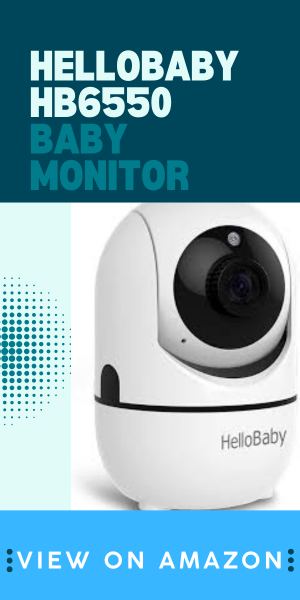
Budget Pick: HelloBaby HB65 – Secure Monitor Under $80
The HelloBaby HB65 delivers a closed, dedicated 2.4GHz radio link with zero internet dependency – so baby monitor hacking via the internet is impossible – at under $80.
- Screen: 5-inch display
- Connection: Dedicated 2.4GHz radio – no WiFi, no cloud, no internet
- Battery: Up to 30 hours in ECO/audio mode
- Range: Up to 1,000 feet in open space
- Features: PTZ, VOX mode, night vision, two-way talk, 8 lullabies
- Price: $63-$80 on Amazon (2026)
Who should buy it: Budget-conscious parents who want a private, offline monitor without paying a premium price.
If You Must Use WiFi: What to Look for to Reduce the Risk of Baby Monitor Hacking
- End-to-end encryption (AES-128 or higher) for all video and audio
- Two-factor authentication (2FA) supported in the app
- Regular firmware updates – check the brand’s update history before buying
- No third-party data sharing – read the privacy policy carefully
- Security certifications – look for SGS Cybersecurity Mark or similar
- US or EU-based cloud servers – subject to stronger data protection laws
How to Stop Your Baby Monitor From Being Hacked
Whether you use a WiFi model or a non-WiFi monitor, these steps will significantly reduce your baby monitor hacking risk. And because most incidents exploit basic, preventable weaknesses, even small changes make a big difference to your family’s security.
Step 1: Change the Default Password – the Easiest Way to Prevent Baby Monitor Hacking
This is the most important step – and the most overlooked. Do not use the password that came with your monitor. Change it to a strong, unique password of at least 12 characters. Because default passwords are publicly listed in product manuals, hackers know them all. So changing yours immediately removes you from the easiest category of targets.
Step 2: Turn On Two-Factor Authentication
If your monitor’s app supports 2FA, turn it on today. Two-factor authentication means that even if a hacker gets your password, they still cannot log in without a second verification code sent to your phone. It takes about two minutes to set up – and it blocks the vast majority of unauthorised login attempts.
Step 3: Update Firmware Every Single Time
Check your monitor’s app for firmware updates regularly – and install them every time. Manufacturers release updates to fix known security holes. But those fixes only protect you if you actually install them. So set a monthly reminder if your app does not send automatic notifications.
Step 4: Put Your Baby Monitor on a Separate Network
Many modern routers let you create a separate “IoT network” for smart home devices. If you put your baby monitor on this separate network, a hacker who breaks into it cannot automatically access your laptop, phone, or personal files. Ask your internet provider for help setting this up if you are not sure how.
Step 5: Check for Unknown Logins and Devices Weekly
Once a week, log into your router’s admin panel and check the connected device list. Also check your monitor app for any active sessions you do not recognise. Because catching unauthorised access early limits the damage, this simple habit can prevent a full baby monitor hacking incident.
Step 6: Use WPA3 Encryption on Your Router
Check your router settings and make sure it uses WPA3 encryption – or at least WPA2. WEP and older methods are easily cracked. And because your baby monitor is only as secure as the network it runs on, this step protects every connected device in your home at once.
Step 7: Switch to an FHSS or DECT Monitor to Eliminate Remote Hacking Risk
If security matters most to you, switching to a non-WiFi FHSS or DECT monitor is the most effective step you can take. These monitors have no internet connection – so they completely eliminate the remote baby monitor hacking risk that WiFi models face. Because the signal travels only between the camera and your parent display, there is no server to breach and no account to steal.
Monitors like the Infant Optics DXR-8 PRO (FHSS) and VTech VM901 (DECT) give you everything a good monitor should offer – video, night vision, two-way talk, and temperature alerts – without any internet exposure at all.
FAQ: Quick Answers for Parents
Can baby monitors be hacked?
Yes. Baby monitors – especially WiFi models – can be hacked if they use weak passwords, outdated firmware, or unencrypted connections. Non-WiFi monitors are much harder to hack because no internet connection is involved. But even they carry a small risk of nearby signal interception.
How common is baby monitor hacking?
More common than most manufacturers admit. The FBI investigated multiple cases in 2025. Over 1.1 million monitors were exposed in the Meari Technology breach in 2026. But millions more parents use monitors safely every day. The risk is real – but it is mostly preventable with basic steps.
How do I know if my baby monitor has been hacked?
The main signs are: strange voices or sounds, the camera moving on its own, the LED blinking when no one is watching, settings or passwords changed without your input, unknown devices on your WiFi, and unexpected login alerts from your monitor app.
Can baby monitors be hacked if they are not on WiFi?
Yes, but it is much harder. Analog non-WiFi monitors can be intercepted nearby. But modern FHSS and DECT non-WiFi monitors use encrypted, frequency-hopping signals. As a result, they cannot be hacked remotely at all – and nearby interception requires advanced specialist equipment.
Which baby monitor is hardest to hack?
FHSS and DECT non-WiFi monitors are the hardest to hack. The Infant Optics DXR-8 PRO (FHSS) and VTech VM901 (DECT) are the top picks in 2026. Because they have no internet connection, remote baby monitor hacking is impossible – and their encrypted signals make nearby interception extremely difficult.
What should I do if my baby monitor was hacked?
Act immediately: unplug the monitor, change all passwords (app and WiFi), enable 2FA, check your router for unknown devices, update firmware, and contact the manufacturer. If you heard a voice or saw unexplained camera movement, file a complaint at ic3.gov.
Does changing my password really prevent baby monitor hacking?
Yes – it is the single most effective step you can take. Because most baby monitor hacking exploits factory default passwords, changing yours immediately removes you from the easiest category of targets. Use a strong, unique password of at least 12 characters and never reuse it on any other account.
9. Quick Summary Block
| Question | Short Answer |
|---|---|
| Can baby monitors be hacked? | Yes. WiFi monitors can be hacked remotely. Non-WiFi monitors can be intercepted nearby. No monitor is 100% safe. |
| How do hackers get in? | Via default passwords, credential stuffing, outdated firmware, and unsecured WiFi networks. |
| How common is it? | More common than companies admit. 1.1M+ devices exposed in 2026. IoT attacks up 46% in 2025. |
| Signs your monitor was hacked | Strange voices, camera moving, LED blinking, changed settings, unknown WiFi devices, login alerts. |
| Can non-WiFi monitors be hacked? | Yes but much harder. Analog: intercept nearby. FHSS/DECT: extremely difficult – no remote hacking possible. |
| Hardest monitor to hack? | FHSS and DECT non-WiFi monitors. Top picks: Infant Optics DXR-8 PRO and VTech VM901. |
| What to do if hacked? | Unplug, change all passwords, enable 2FA, check router, update firmware, report to ic3.gov. |
| Best step to prevent hacking? | Change default password immediately. Then enable 2FA, update firmware, and consider switching to an FHSS monitor. |
10. Our Top Secure Monitor Picks on Amazon
Most Secure Overall: Infant Optics DXR-8 PRO
FHSS encrypted 2.4GHz signal • 5-inch 720p HD screen • Active Noise Reduction • 10 hrs video / 20 hrs audio • Interchangeable lenses • No WiFi. No cloud. No remote access. Baby monitor hacking via the internet is impossible. Around $165-$185.
Most Secure Large Screen: VTech VM901 (7-Inch DECT)
DECT encrypted connection • 7-inch IPS display (biggest non-WiFi screen in 2026) • Full PTZ camera • Two-way talk • 30+ year track record – one of the safest monitors against baby monitor hacking. Around $120-$150.
Best Secure Budget Pick: HelloBaby HB65 (Under $80)
Dedicated 2.4GHz closed radio link • No WiFi, no cloud, no internet • 5-inch display • 30-hour battery • 1,000ft range • PTZ, night vision, VOX, two-way talk • Remote baby monitor hacking is impossible on this model. Around $63-$80.
Sources & References
- eSecurity Planet — Over 1 Million Baby Monitors Exposed Through Meari Flaws (2026)
- State of Surveillance — Baby Monitors: Strangers Watching Your Children (2025)
- SafeHome.org — Stop Baby Monitor Hacking (Rob Gabriele, 2025)
- ExpressVPN — How to Tell If Your Baby Monitor Is Hacked (2026)
- Dexpose — IoT Hacking Statistics 2026
Affiliate note: This article contains affiliate links. If you purchase through them, we may earn a small fee at no extra cost to you. All recommendations are based on independent research and expert reviews.
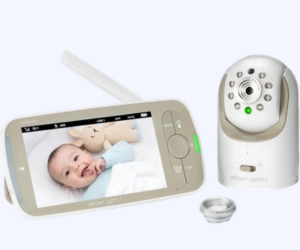
Infant Optics DXR-8 PRO Video Baby Monitor
✔ 5″ HD Screen
✔ Active Noise Reduction
✔ Remote Pan/Tilt/Zoom
✔ 100% Hack-Free