Non-WiFi Baby Monitors: Why Parents Are Ditching WiFi and What to Use Instead (2026 Guide)
⭐ Quick Verdict
Non-WiFi baby monitors are safer and simpler than WiFi models. In short, they use a closed radio link that no one can hack from the internet. For most families, the best pick is the Infant Optics DXR-8 PRO. If you want a big screen instead, go with the VTech VM901. And if you are on a budget, the HelloBaby HB65 costs under $80 and does the job very well.
Table of Contents
- What Is a Non-WiFi Baby Monitor?
- Why Do Parents Avoid WiFi Baby Monitors?
- How Do Non-WiFi Baby Monitors Connect?
- Are Non-WiFi Baby Monitors Safe?
- Is WiFi or Bluetooth Better for Baby Monitors?
- The Best Non-WiFi Baby Monitors in 2026
- When Should You Use a WiFi Baby Monitor?
- FAQ: Quick Answers for Busy Parents
- Quick Summary Block
- Our Top Product Picks on Amazon
1. What Is a Non-WiFi Baby Monitor?
More and more parents are choosing non-WiFi baby monitors in 2026. And the reasons are very clear.
Simply put, a non-WiFi baby monitor sends audio and video from the camera straight to a screen – with no internet needed. There is no app. No cloud. No router. Instead, the signal travels on a private radio channel between the camera and your parent unit.
A WiFi baby monitor, however, works very differently. It connects your nursery camera to your home network and then to the internet. As a result, you watch your baby through a phone app. That is handy. But it also means your baby’s video travels through your router, your internet provider, and a company’s server.
Key Fact
Non-WiFi baby monitors send the signal straight from the camera to your screen. Because of this, no internet is needed. No outside server is involved. What you see stays in your home.
WiFi vs. Non-WiFi: A Quick Comparison
| Feature | Non-WiFi Monitor | WiFi Monitor |
|---|---|---|
| Connection | Private radio link | Home WiFi + internet |
| View from outside home | No | Yes |
| Hack risk | Very low | Moderate to high |
| Needs internet | No | Yes |
| Monthly fees | None | Often $5-$15/month |
| Setup | Plug and play | App + account + network |
| Works without internet | Yes | No |
| Stores video in cloud | No | Yes |
| Price range (2026) | $67-$300 | $100-$400+ |
The table above shows the core differences clearly. But the real story goes deeper. So let us look at why so many parents are now actively choosing to avoid WiFi models.
2. Why Do Parents Avoid WiFi Baby Monitors?
Parents avoid WiFi baby monitors for five main reasons. Above all, privacy and security come first. But there are other big concerns too. So let us go through each one.
2a. Hacking: Real Stories That Scared Parents
Baby monitor hacking is real. In fact, it has happened to real families – and the stories are frightening.
For example, in October 2025, a mother in Colorado heard a stranger’s voice through her baby monitor at night. Her WiFi camera had been hacked. As a result, her story appeared on CBS, CNN, and many other news sites. And she is not alone.
In addition, in 2026, Consumer Reports found that over 1.1 million WiFi baby monitors had a major security flaw. These were made by Meari Technology and sold on Amazon under names like Arenti, Anran, Boifun, and ieGeek. Because of this flaw, hackers could access video, photos, email addresses, and location data.
Real Family Story
The Stripling family in Arkansas found that a stranger had hacked their WiFi monitor and spoken to their baby through it. As a result, they switched to a non-WiFi monitor straight away. They say they will never go back to WiFi. (Source: State of Surveillance / THV11, 2025)
So how does this happen? Hackers scan the internet for cameras with weak or default passwords. When they find one, they can see and hear everything in the room. In some cases, they can even talk through the monitor’s two-way speaker.
Furthermore, only 42% of smart baby monitors met strong cybersecurity standards in 2024, according to Zetronix. So the risk is very real – and it is growing.
Non-WiFi monitors stop this problem completely. Because they never connect to the internet, there is simply no way for a hacker to get in from outside.
2b. Cloud Storage: Who Can See Your Nursery Footage?
WiFi baby monitors do not just stream video. In fact, many also save it. And that raises a serious question: who can access that footage?
Most WiFi monitor brands store your recordings on their own servers. Moreover, some keep them for days or weeks. As the Meari case showed, those servers are not always safe.
The FTC updated its child privacy rules (COPPA) in 2025. However, enforcement is still slow. As a result, some companies may still collect data from your baby’s room – and you may not even know it.
Non-WiFi monitors, on the other hand, save nothing. No account and no cloud. No company gets your baby’s footage. Because of this, it stays completely in your home.
2c. WiFi Goes Down – So Does Your Monitor
Picture this: it is 3am. Your router crashes. Suddenly, you can no longer see or hear your baby.
That is the risk with WiFi monitors. They need your internet to work. So if your WiFi goes down, your monitor goes with it.
Non-WiFi monitors are different, however. They talk directly between the camera and your screen. As a result, even during a full internet outage, you still have a working monitor.
2d. Are There Health Concerns?
Some parents also worry about WiFi signals near a sleeping baby. This is a fair question.
The current science says WiFi emits low-level, non-ionizing radiation. In fact, the World Health Organization (WHO) says that normal WiFi at home is not harmful. So there is no proven danger.
However, some parents prefer to play it safe. They would rather not have a constant WiFi signal next to their baby’s crib. Non-WiFi monitors do still send radio signals. But there is no router in the room. For cautious parents, that feels much better.
2e. Monthly Fees and Products That Stop Working
Here is a cost trap many parents miss. WiFi baby monitors often come with monthly fees.
For example, Nanit charges $5-$10 per month for sleep tracking. Owlet has also moved key features behind a paywall. Over two years, that adds up to $120-$240 – on top of the monitor’s price.
Non-WiFi monitors, in contrast, have no monthly fees. Not ever. You pay once and use it for years.
There is also another long-term risk with WiFi models. If the company shuts down its servers or stops updating the app, your monitor may stop working. Non-WiFi monitors, however, do not depend on any company’s server. So they keep working no matter what.
3. How Do Non-WiFi Baby Monitors Connect?
This is a question many parents wonder about. But the answer is actually simple – and it is exactly why these monitors are so reliable.
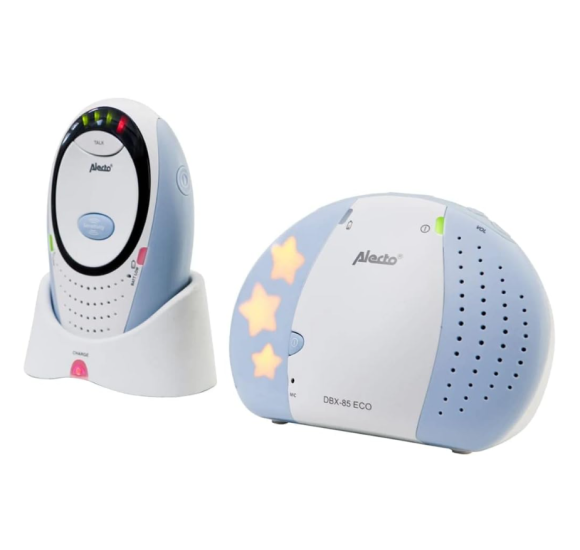
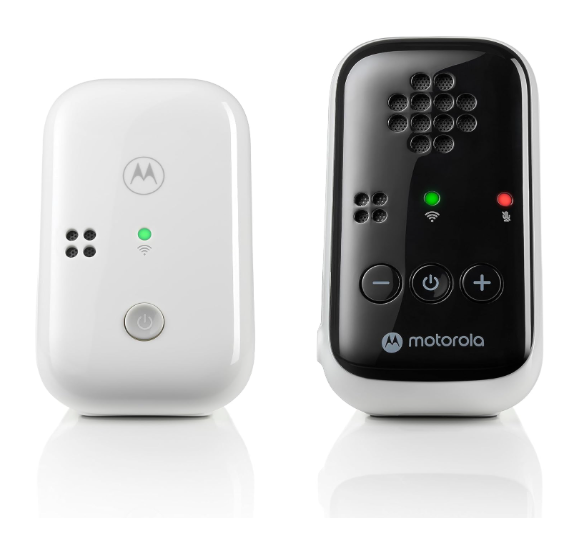
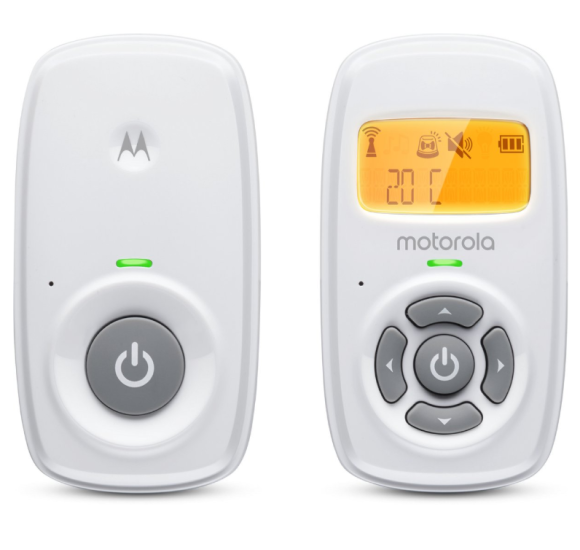
Non-WiFi monitors use a direct radio link between the camera and your screen. In other words, no router, no app, no internet. Here are the main connection types:
DECT (Digital Enhanced Cordless Telecommunications)
DECT runs on 1.9GHz. You may already know it from cordless home phones – and that is no coincidence. It was built specifically for clear, safe home communication.
- Range: Around 150-300 feet indoors
- Security: Encrypted by design
- Interference: Very low – because it runs on its own band, away from WiFi and Bluetooth
- Best for: Flats, smaller homes, parents who want crystal-clear sound
2.4GHz Dedicated Radio
Some non-WiFi monitors use the 2.4GHz band – the same as home WiFi. But they work in a completely different way. Instead of going through your router, the signal goes straight from camera to screen.
- Range: Up to 1,000 feet outdoors, 150-300 feet indoors
- Security: Depends on the model
- Interference: Can have some overlap with other 2.4GHz devices
- Best for: Larger homes and multiple floors
FHSS (Frequency Hopping Spread Spectrum)
FHSS is the most secure type of non-WiFi connection in 2026. Monitors with FHSS jump between dozens of frequencies many times every second.
Because of this, interception is nearly impossible. An eavesdropper cannot lock onto one frequency long enough to pick up the signal. As a result, the Infant Optics DXR-8 PRO and Babysense Prisma – both of which use FHSS – are among the most secure monitors you can buy.
Analog vs. Digital: Which Is Safer?
Older analog monitors can be picked up by nearby devices. They use a fixed, open signal. So someone very close with the right equipment could potentially listen in.
Modern digital monitors – especially FHSS and DECT – are encrypted and secure. In fact, all of the top 2026 models use digital signals. So the old analog era is firmly behind us.
4. Are Non-WiFi Baby Monitors Safe?
Quick Answer
Yes. Non-WiFi baby monitors are safe. They use encrypted radio signals that cannot be accessed from the internet. Because of this, remote hacking is not possible. To intercept one, someone would need to be physically near your home with specialist equipment – and that is a very different threat.
Let us look at this question from a few angles. Because safety covers more than just hacking risk.
Can Someone Intercept a Non-WiFi Monitor?
In theory, yes. But in practice, it is extremely hard. To intercept a modern FHSS or DECT signal, someone would need to:
- Be physically close to your home
- Own specialist radio scanning equipment
- Know how to decode an encrypted, frequency-hopping signal
Now compare that to hacking a WiFi monitor. Anyone with internet access and free online tools can try to break into a poorly secured WiFi camera – from anywhere in the world. So the difference in risk is very clear.
Why Offline Monitors Are More Secure
Non-WiFi monitors have a closed-loop design. The signal goes from the camera to your screen. That is it. No company receives it. No server stores it. And no app sends it online.
Security researcher Rob Gabriele of SafeHome.org explains that non-WiFi monitors using private radio signals are “virtually immune to remote online hacking.” In other words, you simply cannot get that level of safety with any internet-connected device.
Other Safety Tips Worth Knowing
- Battery life: Most parent units last 8-20 hours. So plug it in overnight to be safe.
- Night vision: Most models have infrared night vision up to 15 feet. Therefore, check the specs for your room size.
- Temperature alerts: Some monitors show the room temperature and send alerts. This is especially useful for newborns.
- VOX mode: This turns on the screen only when your baby makes noise. As a result, it saves battery life.
- Signal placement: Because metal objects and other electronics can block signals, keep both units away from them for the best range.
5. Is WiFi or Bluetooth Better for Baby Monitors?
Some parents also find a third option when they research: Bluetooth monitors. So how do all three compare?
| Type | Range | Privacy | Best For |
|---|---|---|---|
| Non-WiFi (DECT/FHSS) | 150-1,000 ft | Best – closed loop | Most homes |
| Bluetooth | 30-100 ft | Good – no internet | Small flats only |
| WiFi | Unlimited (via app) | Moderate | Parents who travel |
Bluetooth Baby Monitors: Private but Too Short-Range
Bluetooth monitors do not need the internet. So they are private. However, the range is very short – usually just 30 to 100 feet. In a larger home, that is simply not enough. In addition, the audio can cut out. So Bluetooth is not ideal for full-time monitoring.
WiFi Monitors: Great Features, but Real Risks
WiFi monitors come with some genuinely great features. For example, you can check on your baby from work. You also get smart sleep alerts and, in some cases, AI tools. These are real benefits.
But every feature comes at a cost. Your baby’s video goes through your router, your internet provider, and a company server. So more features mean more exposure. Every parent has to decide if that trade-off works for them.
Dedicated Radio: The Best Option for Most Parents
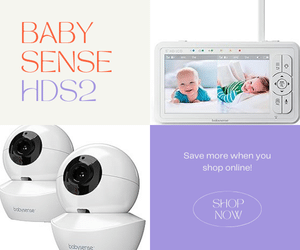
For most families, a DECT or FHSS monitor is the best choice. You get solid video, good range, two-way talk, and night vision – without any internet risk. And unlike Bluetooth, the range is genuinely practical. For example, monitors like the Babysense HD S2 reach up to 1,000 feet in open space. That easily covers most homes.
6. The Best Non-WiFi Baby Monitors in 2026
Here are the top non-WiFi baby monitors for 2026. In particular, we looked at performance, privacy, and value.
Best Overall: Infant Optics DXR-8 PRO – Non-WiFi Baby Monitor
The Infant Optics DXR-8 PRO has been the top-rated non-WiFi monitor for two years in a row. And it earns that spot every time.
- Screen: 5-inch HD at 720p
- Signal: 2.4GHz FHSS – encrypted and frequency-hopping
- Battery: 10 hours on video, 20 hours on audio-only mode
- Audio: Patented Active Noise Reduction (ANR) – filters out white noise machines so you only hear your baby
- Night vision: Infrared, turns on by itself in the dark
- Special feature: You can swap lenses – zoom, wide-angle, or standard
- Price: Around $165-$185 (2026)
Who should buy it: Parents who want the best non-WiFi monitor on the market. In particular, the ANR audio is a real game-changer because it cuts out background noise completely.
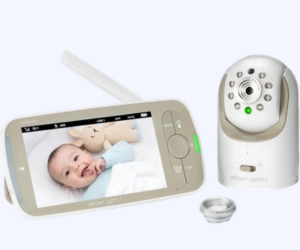
Infant Optics DXR-8 PRO Video Baby Monitor
✔ 5″ HD Screen
✔ Active Noise Reduction
✔ Remote Pan/Tilt/Zoom
✔ 100% Hack-Free
Best Big Screen: VTech VM901 (7-Inch)
Want a large screen? If so, the VTech VM901 is the answer. At 7 inches, it has the biggest display of any non-WiFi monitor in 2026.
- Screen: 7-inch IPS color display
- Signal: DECT – clear and secure
- Camera: Full pan, tilt, and zoom (PTZ)
- Audio: Two-way talk
- Brand trust: VTech has made non-WiFi monitors for over 30 years
- Price: Around $120-$150 (2026)
Who should buy it: Parents who want a clear view from across the room. This is especially great for checking on your baby from the kitchen or living room.
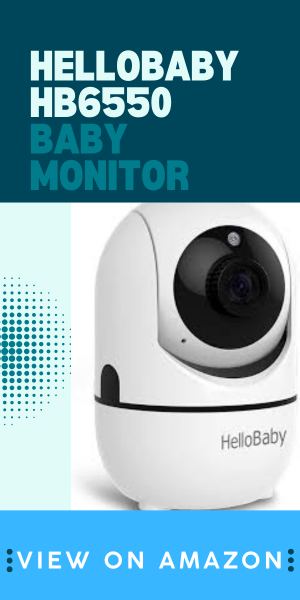
Best Budget Pick: HelloBaby HB65
You do not need to spend $200 for a good non-WiFi monitor. The HelloBaby HB65 proves that clearly.
- Screen: 3.2-inch display
- Signal: Dedicated 2.4GHz radio
- Battery: Up to 30 hours in ECO mode
- Range: Up to 1,000 feet in open space
- Features: PTZ, VOX, night vision, two-way talk, and 8 lullabies
- Price: $63–$80 on Amazon (2026)
Who should buy it: Budget-conscious parents who want all the key features without a big price tag. In fact, this is one of the best value monitors of any type in 2026.
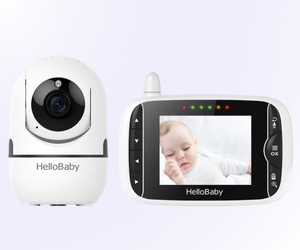
HelloBaby HB65
✔ Secure wireless connection. 2.4GHz Wireless Technology with Digital Encryption
✔ 3.2″ LCD Screen for Clear Viewing + Remote Pan-Tilt-Zoom
✔ Two-Way Audio Communication, Room Temperature Monitor, Lullaby, Sound Level LED Indicator
Best for Two Rooms: Babysense Prisma
Need to watch two children at once? If so, the Babysense Prisma is built exactly for that.
- Screen: 5-inch 720p with split-screen view
- Signal: 2.4GHz FHSS – encrypted
- Cameras: Works with two PTZ cameras at the same time
- Battery: Up to 20 hours in ECO mode
- Extras: 6-color night light, white noise, and lullabies
- Price: Around $140-$180 (2026)
Who should buy it: Families with two children. It is also great for parents who want a camera in the nursery and another room at the same time.
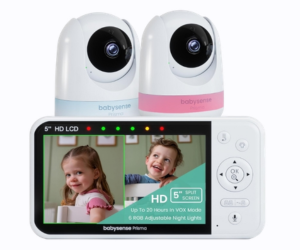
Babysense Prisma Baby Monitor
✓ Hack-Proof Non-WiFi Connection
✓ 20-Hour Battery Life
✓ Split-Screen for Two Rooms
✓ No Monthly Fees
What to Check Before You Buy
Before you choose a monitor, use this checklist. It will help you find the right fit for your home.
- Screen size: At least 4.3 inches. Five inches or more is even better.
- Signal type: Look for FHSS or DECT because they offer the best security
- Range: At least 600 feet for a larger home
- Battery: At least 10 hours on video; 20+ hours on audio mode
- Night vision: Make sure it is included and turns on by itself
- PTZ camera: This lets you move the camera from your screen, so it is very useful
- Two-way talk: Lets you soothe your baby without going into the room
- VOX mode: The screen only turns on when your baby makes noise, which saves battery
- Temperature sensor: Not on every model, but worth paying extra for
- Second camera support: Check if you can add another camera later
7. When Should You Use a WiFi Baby Monitor?
Let us be fair here. Non-WiFi monitors are the best choice for most parents. However, WiFi monitors do make sense in some cases. Here is when:
- You travel for work and therefore need to check on your baby from another city
- You share care with a nanny or family members in other locations who also need access
- You have a very large home where radio range is genuinely not enough
- You want AI features like sleep tracking or breathing alerts that non-WiFi models cannot offer
- You are confident with tech and will set up strong passwords, two-factor login, and keep the app updated
How to Use a WiFi Monitor More Safely
If you do choose a WiFi monitor, follow these steps. They will significantly cut your risk.
- Use a strong, unique password – never use the factory default, because it is the first thing hackers try
- Turn on two-factor login (2FA) in the app if it is available
- Create a separate network for smart devices on your router so your monitor is isolated
- Accept every firmware update – these often fix serious security holes
- Choose a trusted brand and look for one with a strong security record
- Use WPA3 encryption on your router, or at least WPA2
According to TeachToddler’s 2026 buyer guide, no major monitor brand had a confirmed breach in 2026. In most cases, past hacks involved cheap, unbranded cameras with no encryption at all. So the brand you choose really does matter.
8. FAQ: Quick Answers for Busy Parents
Yes. They use encrypted radio signals that no one can access from the internet. Because of this, remote hacking is not possible. The only way to intercept one is to be physically near your home with specialist equipment.
They use a direct radio link between the camera and your screen. The main types are DECT, 2.4GHz radio, and FHSS. In all cases, no router or internet connection is needed.
The top reasons are hacking risk and cloud storage concerns. In addition, non-WiFi monitors have no monthly fees and keep working even when the internet goes down. Setup is also much simpler – just plug in and go.
For most parents, neither is the best option. Instead, a DECT or FHSS monitor beats both. It has a longer range than Bluetooth and better privacy than WiFi. And because it uses a direct radio link, no internet is needed.
The Infant Optics DXR-8 PRO is the best overall. If you want the biggest screen, go with the VTech VM901. For the best budget pick, choose the HelloBaby HB65. And if you need two rooms covered, the Babysense Prisma is the top pick.
It is extremely hard. Modern FHSS and DECT monitors are encrypted. So a hacker would need to be physically close to your home and use specialist equipment. That is very different from WiFi monitors, which can be attacked from anywhere in the world.
Yes, significantly less. There are no monthly fees at all. Some WiFi brands like Nanit charge $5-$10 per month. As a result, over two years you could save $120-$240 by choosing a non-WiFi model. You simply pay once and that is it.
9. Quick Summary Block about Non-WiFi Baby Monitors
| Question | Short Answer |
|---|---|
| What is a non-WiFi baby monitor? | A monitor that sends video and audio directly to your screen. No internet. No app. No cloud storage. |
| Why avoid WiFi monitors? | Because of hacking risk, cloud storage concerns, monthly fees, and the fact they stop working when the internet goes down. |
| How do they connect? | Via DECT, 2.4GHz radio, or FHSS. All direct. No internet needed. |
| Are they safe? | Yes. Encrypted signals. Cannot be hacked remotely. Much safer than WiFi models. |
| Best model in 2026? | Infant Optics DXR-8 PRO (overall), VTech VM901 (big screen), HelloBaby HB65 (budget), Babysense Prisma (two rooms). |
| Monthly fees? | None. You pay once. That is it. |
| Who should use WiFi instead? | Parents who travel, share care with people in other places, or need AI sleep features. |
10. Our Top Picks on Amazon
Best Overall: Infant Optics DXR-8 PRO
5-inch 720p screen • FHSS encrypted signal • Active Noise Reduction • 10 hrs video / 20 hrs audio • Swap-out lenses • No WiFi. No cloud. No fees. Around $165–$185.
Best Big Screen: VTech VM901 (7-Inch)
7-inch IPS screen — the biggest non-WiFi display in 2026 • DECT signal • Full PTZ camera • Two-way talk • Trusted brand with 30+ years of non-WiFi monitors. Around $120–$150.
Best Budget: HelloBaby HB65 (Under $80)
5-inch screen • 30-hour battery • 1,000ft range • Full PTZ • Night vision • VOX • Two-way talk • 8 lullabies • No WiFi. No fees. Around $63–$80.
Best for Two Rooms: Babysense Prisma
5-inch split-screen display • Two PTZ cameras • FHSS encrypted • 20-hour battery • White noise and lullabies • Great for two children. Around $140–$180.
Sources & References
- Consumer Reports — Meari Technology WiFi Baby Monitor Security Report (2026)
- SafeHome.org — Baby Monitor Hacking Guide (Rob Gabriele, 2025)
- State of Surveillance — Baby Monitors: Strangers Watching Your Children (2025)
- TeachToddler — Baby Monitor Buying Guide 2026
- SmartHomePerfected — Best Non-WiFi Baby Monitors 2026
Affiliate note: This article has affiliate links. If you buy through them, we may earn a small fee at no extra cost to you. All picks are based on independent research.